Archive
En un lugar de la Mancha
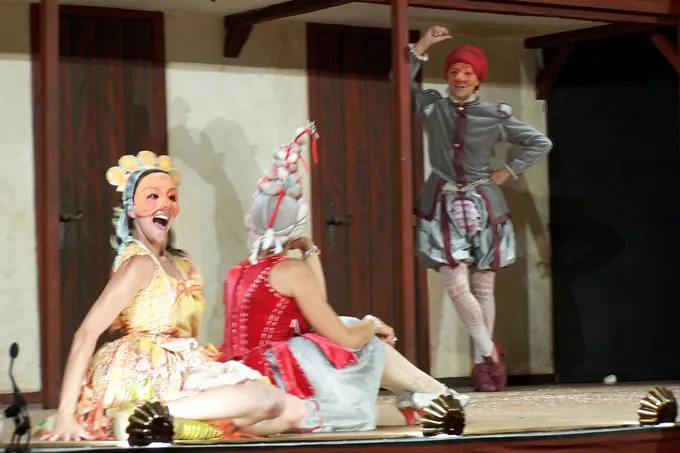
The idea is a simple one: to bring theatre to the places it seldom reaches or, at worst, simply never reaches. The thought that this production may be many people’s first contact with theatre makes your hair stand on end — but you also think that audiences have changed a great deal in recent years, that their cultural habits bear no resemblance to those of the past, that news travels fast out here, that the train goes by at full speed and the roads carry us in no time at all to sprawling shopping centres, bargain-basement cinemas and virtual paradises that blind our senses and lull, when they do not offend, our drowsy intellect.
Villages are no longer what they were. The audience, like it or not, has changed. We have changed.
The result, in the spirit of Lorca and his La Barraca, travels to those places where the roads narrow and you have to pull onto the verge. A lorry works its way through the winding geography of Castilla-La Mancha and settles for a few hours in the square, on the threshing floors, or simply at the entrance to the village because it cannot get through between one street and the next. In twenty minutes a set of hydraulics raises the roof and the side panels, turning this lorry into a stage — a corral de comedias, to be precise — with everything needed to give a performance.
The article about the production, published in the journal ADE Teatro (no. 107, November-December 2005, dossier “El Quijote a escena”), can be read in full in the notebook.
Credits
Texts: Miguel de Cervantes. “La guarda cuidadosa”, “El viejo celoso” and “La cueva de Salamanca”
Performers: Carmen Arribas, Cristina Penco, Mª Ángeles González, Rosa María Herrera, Alfredo Martínez and Chete Guzmán
Music composition: Mariano Lozano
Mask design: Engracia Cruz
Set design: Ciro
Costume design: Liv Ortiz
Costume making: Mónica Ramos
Lighting design: Iñigo Benítez
Production: UTE Armar Teatro (Toledo) & Falsaria de Indias (Albacete), with Fundación IV Centenario
Dramaturgy and direction: Andrés Beladiez
Photographs: Falsaria de Indias
Tour map
Camarenilla
- Pre-premiere
Chillón
- Chillón
Porzuna
- Porzuna
Los Cortijos
- Los Cortijos
Fernán Caballero
- Fernán Caballero
Picón
- Picón
Hinojosas de Calatrava
- Hinojosas de Calatrava
Moral de Calatrava
- Moral de Calatrava
Castellar de Santiago
- Castellar de Santiago
Alhambra
- Alhambra
Villahermosa
- Villahermosa
Almedina
- Almedina
Villamanrique
- Villamanrique
Villaverde de Guadalimar
- Villaverde de Guadalimar
Férez
- Férez
Socovos
- Socovos
Bogarra
- Bogarra
Paterna de Madera
- Paterna de Madera
Villapalacios
- Villapalacios
Albatana
- Albatana
Bonete
- Bonete
Motilleja
- Motilleja
Alborea
- Alborea
Barrax
- Barrax
Minaya
- Minaya
Villagarcía del Llano
- Villagarcía del Llano
El Herrumblar
- El Herrumblar
Palomares del Campo
- Palomares del Campo
Carrascosa del Campo
- Carrascosa del Campo
Huete
- Huete
Arcas del Villar
- Arcas del Villar
Villar de Olalla
- Villar de Olalla
Cañete
- Cañete
Sotos
- Sotos
Tragacete
- Tragacete
Priego
- Priego
Cañamares
- Cañamares
Beteta
- Beteta
Alustante
- Alustante
Milmarcos
- Milmarcos
Alcolea del Pinar
- Alcolea del Pinar
Campillo de Ranas
- Campillo de Ranas
Cogolludo
- Cogolludo
Humanes
- Humanes
Hita
- Hita
Torija
- Torija
Albares
- Albares
Budia
- Budia
Sacedón
- Sacedón
Brihuega
- Brihuega
Cabezamesada
- Cabezamesada
Lillo
- Lillo
Turleque
- Turleque
El Romeral
- El Romeral
Dosbarrios
- Dosbarrios
Cabañas de Yepes
- Cabañas de Yepes
Los Navalucillos
- Los Navalucillos
Villamuelas
- Villamuelas
Alcabón
- Alcabón
Bargas
- Bargas
Castillo de Bayuela
- Castillo de Bayuela
Numancia de la Sagra
- Numancia de la Sagra
Alcolea del Tajo
- Alcolea del Tajo
Alcañizo
- Alcañizo
Azuqueca de Henares
- Azuqueca
Mazarambroz
- Mazarambroz
Villamiel
- Villamiel
Cobisa
- Cobisa
Alcaraz
- Alcaraz
Yuncos
- Yuncos
Jadraque
- Jadraque
Carcelén
- Carcelén
Santa Cruz de la Zarza
- Santa Cruz de la Zarza
Huerta de Valdecarábanos
- Huerta de Valdecarábanos
Horche
- Horche
Novés
- Novés
Quero
- Quero
Orgaz
- Orgaz
Mota del Cuervo
- Mota del Cuervo
Almagro
- Festival Internacional de Teatro Clásico de Almagro
- Festival Internacional de Teatro Clásico de Almagro
- Festival Internacional de Teatro Clásico de Almagro
- Festival Internacional de Teatro Clásico de Almagro
- Festival Internacional de Teatro Clásico de Almagro
- Festival Internacional de Teatro Clásico de Almagro